Archive for the “Wind Power” Category

Published May 14, 2013, Associated Press

CONVERSE COUNTY, Wyo. –  The Obama  administration has never fined or prosecuted a wind farm for killing eagles and  other protected bird species, shielding the industry from liability and helping  keep the scope of the deaths secret, an Associated Press investigation has  found.

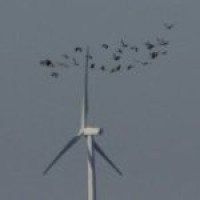
More than 573,000 birds are killed by the country’s wind farms each year,  including 83,000 hunting birds such as hawks, falcons and eagles, according to  an estimate published in March in the peer-reviewed Wildlife Society  Bulletin.

Each death is federal crime, a charge that the Obama administration has used  to prosecute oil companies when birds drown in their waste pits, and power  companies when birds are electrocuted by their power lines. No wind energy  company has been prosecuted, even those that repeatedly flout the law.

Read more at Fox News

Comments 6 Comments »

By John Murawski

State officials have approved a proposed 49-turbine wind farm in Eastern North Carolina that critics worry could kill migrating birds from the Pocosin Lakes National Wildlife Refuge nearby.

The N.C. Utilities Commission said Thursday that it had no legal authority to reject the Pantego Wind Energy Facility, which would spread over 11,000 acres in Beaufort County. But the state commission said the wind farm can’t move ahead until it receives state and federal environmental permits and meets other strict conditions.

As it is, the wind project is delayed by one year, with the earliest possible date it could be operating and generating electricity now put back to late 2013.

The project, proposed by Chicago-based Invenergy, would feature turbines reaching nearly 500 feet into the air to the tip of the blade. The blades could achieve rotational speeds exceeding 100 miles per hour in air space congested with birds and bats – a chief concern to naturalists and environmentalists who wanted more research on bird flight patterns before allowing the project to proceed.

At risk are several species, including some 100,000 tundra swans that migrate to the wildlife refuge each winter and forage on nearby farms, an annual spectacle and tourist attraction.

Read the rest at the Raleigh News & Observer

Comments 32 Comments »

By Dan Springer

Wind farms in the Pacific Northwest — built with government subsidies and maintained with tax credits for every megawatt produced — are now getting paid to shut down as the federal agency charged with managing the region’s electricity grid says there’s an oversupply of renewable power at certain times of the year.

The problem arose during the late spring and early summer last year. Rapid snow melt filled the Columbia River Basin. The water rushed through the 31 dams run by the Bonneville Power Administration, a federal agency based in Portland, Ore., allowing for peak hydropower generation. At the very same time, the wind howled, leading to maximum wind power production.

Demand could not keep up with supply, so BPA shut down the wind farms for nearly 200 hours over 38 days.

“It’s the one system in the world where in real time, moment to moment, you have to produce as much energy as is being consumed,” BPA spokesman Doug Johnson said of the renewable energy.

Now, Bonneville is offering to compensate wind companies for half their lost revenue. The bill could reach up to $50 million a year.

The extra payout means energy users will eventually have to pay more.

“We require taxpayers to subsidize the production of renewable energy, and now we want ratepayers to pay renewable energy companies when they lose money?” asked Todd Myers, director of the Center for the Environment of the Washington Policy Center and author of “Eco-Fads: How the Rise of Trendy Environmentalism is Harming the Environment.”

Read the rest at Fox News.

Comments 13 Comments »

Investors Business Daily Editorial

Energy: The White House billed President Obama’s energy policy speech as a response to mounting criticism of record high gas prices. What he delivered was a grab bag of excuses and outright falsehoods.

Obama’s main message to struggling motorists was: It’s not my fault, so stop whining. The speech only got worse from there, recycling excuses and myths that Obama’s peddled for years. But there were some standout whoppers that deserve debunking. The five biggest:

“We’re focused on production.”

Fact: While production is up under Obama, this has nothing to do with his policies, but is the result of permits and private industry efforts that began long before Obama occupied the White House.

Obama has chosen almost always to limit production. He canceled leases on federal lands in Utah, suspended them in Montana, delayed them in Colorado and Utah, and canceled lease sales off the Virginia coast.

His administration also has been slow-walking permits in the Gulf of Mexico, approving far fewer while stretching out review times, according to the Greater New Orleans Gulf Permit Index. The Energy Dept. says Gulf oil output will be down 17% by the end of 2013, compared with the start of 2011. Swift Energy President Bruce Vincent is right to say Obama has “done nothing but restrict access and delay permitting.”

“The U.S. consumes more than a fifth of the world’s oil. But we only have 2% of the world’s oil reserves.”

Fact: Obama constantly refers to this statistic to buttress his claim that “we can’t drill our way to lower gas prices.” The argument goes that since the U.S. supply is limited, it won’t ever make a difference to world prices.

Read the rest at Investors Business Daily.

Comments 75 Comments »

Wind Turbine

By Patrick Moore

Southwestern Ontario’s flourishing wind energy industry came under fire Wednesday from the co-founder of Greenpeace.

Dr. Patrick Moore told more than 1,000 area farmers the industry destroys more jobs than it creates, and causes energy prices to climb for all users.

“The industry is a destroyer of wealth and negative to the economy,” said Moore, speaking at the 19th annual Southwest Agricultural Conference at Ridgetown campus of the University of Guelph.

Moore, who now refers to himself as the “sensible environmentalist,” said the solar bubble has burst and thinks the wind bubble is about to burst.

“I’m happy for the farmers who are receiving royalties for allowing the wind towers to be built on their farms,” he said. “They deserve it — but the cost to consumers will continue to climb — partly because of rate increases and partly due to tax increases.”

Moore said there wouldn’t be wind farms in southwestern Ontario if taxpayers weren’t paying the bill.

Read the rest at Climate Realists.

Comments 5 Comments »

Obama in 2008: “Under my plan… electricity rates will necessarily skyrocket.”

By Dennis Cauchon

Electric bills have skyrocketed in the last five years, a sharp reversal from a quarter-century when Americans enjoyed stable power bills even as they used more electricity.

Households paid a record $1,419 on average for electricity in 2010, the fifth consecutive yearly increase above the inflation rate, a USA TODAY analysis of government data found. The jump has added about $300 a year to what households pay for electricity. That’s the largest sustained increase since a run-up in electricity prices during the 1970s.

Electricty is consuming a greater share of Americans’ after-tax income than at any time since 1996 — about $1.50 of every $100 in income at a time when income growth has stagnated, a USA TODAY analysis of Bureau of Economic Analysis data found.

Read the rest at USA Today.


Comments 26 Comments »

power-transmission-linesFrom Plains Daily

North Dakota Attorney General Wayne Stenehjem is announcing a lawsuit against the State of Minnesota over the latter state’s restrictions on using power from coal plants, among other sources.

“It is unfortunate it has come to this. As Minnesota seeks to rebuild its economy, it will need energy,” said Stenehjem in a press release. “Much of that energy will need to come from sources outside Minnesota.”

In its lawsuit, North Dakota alleges that the Next Generation Energy Act violates the Commerce Clause of the United States Constitution, unconstitutionally interfering with North Dakota’s energy production. The NGEA imposes prohibitions on energy imported from North Dakota, and while the law does make some exemptions the State of North Dakota is alleging that those exemptions benefit only Minnesota-based businesses and projects.

Read the rest at Plains Daily.

Comments 45 Comments »

corruptionBy Alexander Burns

President Barack Obama will raise money in early October with a Missouri businessman whose company benefited from a $107 million federal tax credit to develop a wind power facility in his state.

Tom Carnahan, a scion of Missouri’s most prominent Democratic political family, is listed on Obama’s campaign website as a host of a $25,000-per-person fundraiser to be held in St. Louis on October 4.

His investment firm, Wind Capital Group, was helped by a sizable credit authorized in the stimulus, for an energy project in northwest Missouri.

Republicans argue that it’s inappropriate for the Obama campaign to raise money from a donor who has benefited directly from the Recovery Act.

Missouri Republican Party executive director Lloyd Smith compared the situation to the Solyndra affair, in which the Obama administration reportedly rushed federal support to a green-energy firm that subsequently collapsed.

Read the rest at Politico.

Comments 7 Comments »

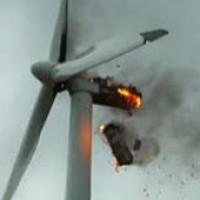
flaming-wind-turbineSubsidies fail to help sector take root

By Ben Wolfgang

The green-jobs revolution may be going up in smoke.Despite billions of dollars in federal investment and cheerleading from President Obama, even the most ardent supporters of a transformed, job-generating energy sector based largely on wind, solar and other renewable sources acknowledge that their dreams have not translated into reality. The records for other countries chasing green employment opportunities have been equally unimpressive.

Rep. Maxine Waters, California Democrat, told MSNBC last month that, despite impassioned support from liberal Democrats and environmentalists, “green jobs” initiatives “have been about a lot of talk, and not a lot has been happening on that.”

The absence of a promised boom in environmental jobs has become a talking point among Republicans who are campaigning to unseat Mr. Obama in the 2012 election.

Mr. Obama “keeps talking about green jobs,” former Massachusetts Gov. Mitt Romney said during the GOP candidates debate Wednesday night. “Where are they? Let’s have real jobs.”

Talk of green jobs was conspicuous by its absence from Mr. Obama’s jobs speech to a joint session of Congress on Thursday night. He gave the address on the same day that the FBI raided California solar-energy company Solyndra, which filed for bankruptcy and laid off at least 900 full-time employees.

Read the rest at the Washington Times.

Comments 4 Comments »

ge-greenGE CEO Jeffrey Immelt, the head of Barack Obama’s Economic Advisory Panel, was invited to sit with the First Lady during the president’s speech to Congress this past week. He’s been a strong supporter of the president since he took over the White House and his companies have received plenty of government funds as well.

GE was awarded 44 contracts totaling over $46,000,000 and 44 grants totaling more than $79,000,000 from the Obama-Pelosi $757 billion dollar stimulus package. Millions of dollars in stimulus funds were used by GE in green energy projects.

Today GE announced that it was going to gut its offshore wind-power plans.

Read the rest at Gateway Pundit.

Comments 48 Comments »

Wind Turbine

Wind Turbine

Wind power can be more expensive and dirty than we think.


By David Schnare

As most of the Republican presidential hopefuls stake their positions to win the hearts of the party’s base, the Tea Party has made it safe for honest conservatives to stand up and demand more than spin.If we can demand fiscal responsibility, however, we also should demand fiscal honesty. And, if there is a subject where Republicans should be willing to be honest, it is on environmental and energy policy – in particular, climate change. After all, environmental policy does not sway voters, as it always ranks last on surveys that ask about domestic priorities. Republicans don’t get any of the hard “green” voters and never will, so they should be honest about today’s hallmark environment and energy issue.

Texas Gov. Rick Perry is just the latest to state that he doesn’t believe the science on climate change is settled – a nice start. Unfortunately, all the candidates say they support an “all of the above” energy policy, which is problematic. Are they talking about options available within the free market or about an outcome determined by bureaucrats to be forced on the public?

If the candidates understand what “all of the above” has meant traditionally, they would know that it is often “greenwashing” code for reduction in fossil fuel use and support for mandates and subsidies for renewables such as wind as a replacement. That means they oppose the increase in use of cheap, affordable energy in favor of continued heavy intervention by government. We’ve seen how well that turns out.

Read the rest at the Washington Times.

Comments 1 Comment »

Wind Turbine

Wind Turbine

By American Tradition Institute

As the new state legislature scrutinizes Minnesota’s restrictive energy policies, a study commissioned by the American Tradition Institute and the Minnesota Free Market Institute provides several reasons for lawmakers and new Gov. Mark Dayton to reverse the state’s damaging Renewable Portfolio Standard.

The study found that Minnesotans would pay $15 billion more for electricity between 2016 and 2025 because of the state’s RPS, as alternative energy is more costly and unreliable than conventional sources such as coal or natural gas. Meanwhile there will be negligible environmental benefit, as it is unlikely that use of renewables – especially wind, which the state mandates as a large percentage of its RPS – actually reduce greenhouse gas emissions. The study was prepared by economists at the Beacon Hill Institute at Suffolk University in Boston.

Read the rest at American Tradition Institute.

Comments 63 Comments »

dutch-windmillThe last we saw such an economy was in the 13th Century

By Jerry Taylor and Peter Van Doren

“Green” energy such as wind, solar and biomass presently constitute only 3.6% of fuel used to generate electricity in the U.S. But if another “I Have a Dream” speech were given at the base of the Lincoln Memorial, it would undoubtedly urge us on to a promised land where renewable energy completely replaced fossil fuels and nuclear power.How much will this particular dream cost? Energy expert Vaclav Smil calculates that achieving that goal in a decade–former Vice President Al Gore’s proposal–would incur building costs and write-downs on the order of $4 trillion. Taking a bit more time to reach this promised land would help reduce that price tag a bit, but simply building the requisite generators would cost $2.5 trillion alone.

Let’s assume, however, that we could afford that. Have we ever seen such a “green economy”? Yes we have; in the 13th century.

Renewable energy is quite literally the energy of yesterday. Few seem to realize that we abandoned “green” energy centuries ago for five very good reasons.

Read the rest at Forbes.

Comments 41 Comments »

chesserBy Paul Chesser

Living in a home with four kids and two dogs, one child’s “clean” can mean “unacceptable” to an adult — think barely visible shower scum or machine-washed plates without phosphates.

And necessary energy levels and types mean different things to different people: A back-to-nature maiden who practices what she preaches needs much less than a multitasker who watches her LCD TV while researching on the Internet and listening to her iPod.

And as we know from years of observation of political discourse, one man’s “standard” is another’s moral abhorrence.

Put them together in a “Clean Energy Standard” (CES) and you ask for real trouble.

But that’s not stopping Sens. Jeff Bingaman of New Mexico and Lisa Murkowski of Alaska, who on Monday — as Chairman and Ranking Republican respectively of the Senate Energy and Natural Resources Committee — issued a “white paper” that solicits comments on what should constitute a CES. You might remember that in his State of the Union address last January 25, President Obama proposed that the federal government impose an 80 percent standard by the year 2035.

Read the rest at the American Spectator.

Comments 1 Comment »

bpBy Stephen Power And Ben Casselman

Three big companies quit an influential lobbying group that had focused on shaping climate-change legislation, in the latest sign that support for an ambitious bill is melting away.

Oil giants BP PLC and ConocoPhillips and heavy-equipment maker Caterpillar Inc. said Tuesday they won’t renew their membership in the three-year-old U.S. Climate Action Partnership, a broad business-environmental coalition that had been instrumental in building support in Washington for capping emissions of greenhouse gases.

The move comes as debate over climate change intensifies and concerns mount about the cost of capping greenhouse-gas emissions.

On a range of issues, from climate change to health care, skepticism is growing in Washington that Congress will pass any major legislation in a contentious election year in which Republicans are expected to gain seats. For companies, the shifting winds have reduced pressure to find common ground, leading them to pursue their own, sometimes conflicting interests.

Last week, the head of the Pharmaceutical Research and Manufacturers of America, Billy Tauzin, said he would step down as president of the industry’s main lobby in Washington, amid criticism from some in the industry over the alliance he made last year with the White House to support health-care legislation.

The administration had worked hard to persuade industry groups to climb aboard its major legislative initiatives—a tack many business interests saw as sensible following the Democrats’ big gains in the 2008 elections. But “unlikely bedfellows make for breakups,” said Kevin Book, managing director of Clearview Energy Partners, a consulting firm.

Spokesmen for ConocoPhillips and BP said the companies still support legislation to reduce greenhouse-gas emissions, but believe they can accomplish more working outside USCAP’s umbrella. Caterpillar said it plans to focus on commercializing green technologies.

ConocoPhillips’s senior vice president for government affairs, Red Cavaney, said the USCAP was focused on getting a climate-change bill passed, whereas Conoco is increasingly concerned with what the details of such a bill would be.

“USCAP was starting to do more and more on trying to get a bill out without trying to work as much on the substance of it,” Mr. Cavaney said.

A spokesman for USCAP said it intends to continue its work. More than 20 other large companies, including oil company Royal Dutch Shell PLC and industrial heavyweights General Electric Co. and Honeywell International Inc., remain in the coalition with environmental groups such as the Environmental Defense Fund and Natural Resources Defense Council. The USCAP said it expects to add new members in coming months.

“We think there’s momentum to get [a climate bill] done,” USCAP spokesman Tad Segal said. “President [Barack] Obama’s State of the Union address made it clear the administration is behind us.”

Read the rest of this article at Wall Street Journal.

Comments 8 Comments »