Archive for the “Electric Vehicles” Category
By Paul Chesser
Last week Frito-Lay, the $12 billion snack foods division of PepsiCo, boasted it would add 10 all-electric delivery trucks in Orlando, Fla., as part of its plan to deploy 176 such vehicles in the U.S. and Canada by the end of year.
As is custom with corporate announcements that proclaim their eco-accomplishments, so as to pacify persistent climate alarmists, Frito-Lay said the vehicles would emit “zero” pollutants from tailpipes and release 75 percent fewer greenhouse gases than diesel. The ETs (electric trucks) can allegedly run 100 miles on a single charge, and Frito-Lay says the groundbreaking new haulers provide “a long-term economically viable solution” – apparently to solve global warming.
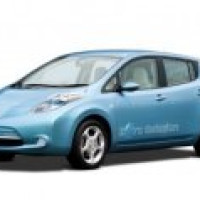
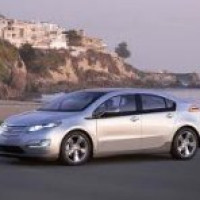
Regular readers of NLPC should know the Chevy Volt sticker price, before the $7,500 tax credit, is $41,000, and for the Nissan Leaf it’s $35,200. So the cost for an electric delivery truck must be somewhat higher, right? And you’d think that Frito-Lay, and any other company that undertakes an electric truck program to meet its distribution needs, would go to great expense for a much heavier and larger electric transporter than the Volt and Leaf, correct?
Not so fast, Sparky.
While it is certainly true the electric trucks (ETs) are more expensive, that doesn’t mean Frito-Lay is footing the bill for them. Yes, astute NLPC reader, you’ve figured out who’s covering the bill: taxpayers.
Read the rest at National Legal and Policy Center.
37 Comments »
By Paul Chesser
On Monday NLPC’s Mark Modica smartly called into question Consumer Reports’ sudden change in opinion about the electric hybrid Chevy Volt from a vehicle that they once believed “doesn’t seem to make a lot of sense,” to one the publication recommends. The next day, however, CR delivered an online review of the major all-electric vehicle on the U.S. market “the Nissan Leaf ” and while not intended to be scathing, the account given by reviewer Liza Barth makes the car sound so unappealing, she should have panned it outright.
I wish I could reproduce her entire account here without a charge of plagiarism, to detail exactly what a turkey the Leaf is, so make sure you follow the link to Barth’s assessment. And while giving somewhat a nod of approval in a late September review based upon CR’s very controlled facility testing, Barth’s real-life experience told the true story.
Her test of the vehicle was over the course of a long weekend, beginning on a Thursday evening. On her Friday morning commute from her New Jersey home to CR’s Yonkers headquarters which she said normally includes a 33-mile ride that incorporates the Tappan Zee Bridge over the Hudson River. She already suffered a case of range anxiety. “So,” Barza wrote, “I opted to travel fewer miles and pay the $12 toll over the George Washington Bridge and another $2.25 over the Henry Hudson Bridge.” Ouch.
Barza contended that she and her kids enjoyed the Leaf and had fun driving it, but apparently only so long as she traveled no farther than the corner store (or an equivalent distance). Then she and her husband planned an evening dinner date, so she plugged the Leaf in during the afternoon for five hours (isn’t that an entire afternoon?), which she said only raised the range from 25 miles to 75 miles. “I wasn’t confident we would make it there and back to our dinner location, which was 60 miles round trip,” Barza recounted. So the Leaf could not transport them for the evening.
Read the rest at National Legal and Policy Center.
87 Comments »
By Neil Munro
The White House’s green technology revolution is sitting in an auto lot in Butler, Pa., and nobody is buying.
“Nobody comes in to ask, nobody comes in to look. The American people are smarter than the government. They’re not buying that car,” said Republican Rep. Mike Kelly, who owns the auto lot where one of General Motors’ combined electric-and-gasoline powered Volt autos sits unwanted, unsold and unused.
The Chevy Volt would cost its buyer almost $40,000 “even after a $7,500 federal check and that’s more than twice the price of a comparable Chevy Cruze, Kelly told The Daily Caller. “I just pay interest on it, insure it, and in another week or month, we’ll scrape snow off it.” (SEE ALSO: Obama to go around Congress on “regular basis” to “heal the economy.”
His lonely Volt, however, isn’t truly alone. There are 3,370 Volts sitting in auto lots around the country, up from 2,600 on Oct. 3, according to cars.com, one of the nation’s largest automotive classified sites.
The Chevy Volt was to be a centerpiece of President Barack Obama’s green technology industrial revolution, and of his 2012 re-election campaign.
It, and similar green technology products, were expected to employ up to two million people by 2010, according to Obama’s economic advisers. The electric car boosters at the Department of Energy, for example, predicted production of up to 120,000 Volts per year from 2012 onwards, according to a Feb. 2011 update of the DOE’s ambitious report, “One Million Electric Vehicles By 2015.”
The car is the “flagship model of the government-industrial complex,” said Patrick Michaels, a senior research fellow at the libertarian Cato Institute. But sales data shows “this thing is not selling like they thought it would.”
Read the rest at Daily Caller.
51 Comments »
By Matthew Mosk and Ronnie Greene
With the approval of the Obama administration, an electric car company that received a $529 million federal government loan guarantee is assembling its first line of cars in Finland, saying it could not find a facility in the United States capable of doing the work.
Vice President Joseph Biden heralded the Energy Department’s $529 million loan to the start-up electric car company called Fisker as a bright new path to thousands of American manufacturing jobs. But two years after the loan was announced, the job of assembling the flashy electric Fisker Karma sports car has been outsourced to Finland.
Read the rest and see the video at ABC News.
38 Comments »
From KSBW
A Salinas car manufacturing company that was expected to build environmentally friendly electric cars and create new jobs folded before almost any vehicles could run off the assembly line.
The city of Salinas had invested more than half a million dollars in Green Vehicles, an electric car start-up company.
All of that money is now gone, according to Green Vehicles President and Co-Founder Mike Ryan.
Read the rest at KSBW.
39 Comments »
|