Archive for January, 2009

NY Times Environmental Reporter, Andrew Revkin

NY Times Environmental Reporter, Andrew Revkin

By Andrew C. Revkin 

A new poll suggests that Americans, preoccupied with the economy, are less worried about rising global temperatures than they were a year ago but remain concerned with solving the nation’s energy problems.
The findings are somewhat at odds with President Obama, who has put a high priority on staving off global warming and vowed Tuesday in his Inaugural Address to “roll back the specter of a warming planet.”

In the poll, released Thursday by the nonpartisan Pew Research Center, global warming came in last among 20 voter concerns; it trailed issues like addressing moral decline and decreasing the influence of lobbyists. Only 30 percent of the voters deemed global warming to be “a top priority,” compared with 35 percent in 2008.

“Protecting the environment,” which had surged in the rankings from 2006 to 2008, dropped even more precipitously in the poll: only 41 percent of voters called it a top priority, compared with 56 percent last year.

In contrast, dealing with the nation’s energy problems ranked sixth in the poll — just behind education and social security — with 60 percent of voters endorsing it as a top priority.

The declining interest in global warming and other environmental issues might be unsurprising at a time when Americans face far more imminent threats to their jobs and homes. “Strengthening the nation’s economy” was the top-ranked concern of voters in the Pew poll. A relatively cool year and a harsh winter in North America and Europe have not helped, inspiring some commentators and a small cluster of scientists to make skeptical remarks about “global cooling.”

Social scientists say that environmental concerns are often the first to fall off the table when any more immediate threat surfaces. Andrew Kohut, the president of the Pew Research Center, said a similar pattern was seen in the Pew poll after the attacks of Sept. 11, 2001, when second-tier issues faded in voters’ minds.

“Concern for terrorism overshadowed all else,” Mr. Kohut said.

The public’s waning interest in global warming poses a challenge for Mr. Obama, who emphasized climate change throughout his campaign and pledged to seek a cap on emissions in the United States of heat-trapping gases, led by carbon dioxide, which come mainly from burning coal and oil. Such a cap, even if it includes various mechanisms intended to ease the cost, would by design raise the price of energy coming from those fossil fuels, which still underpin the American and the global economies.

Mr. Obama’s political foes have already seized on the cooling of public concern.

Marc Morano, the communications director for the Republican minority on the Senate Environment and Public Works Committee, has been sending out e-mail alerts, sometimes several a day, highlighting stories on winter weather and other surveys suggesting a shift in public attitudes.

Read the rest of this story at the New York Times.

Comments 13 Comments »

A Cooling World

A Cooling World

But a professor of geological sciences at the University of Minnesota, Duluth, characterized the report as telling a “rather sensational story.”

By Paul Walsh

Earth is “on the brink of entering another Ice Age” that will last for the next 100,000 years, reports the Russian Pravda Online newspaper, attempting to counter the widespread view that human activity is contributing to an unwanted and dangerous warming of the planet.

Based on a “large and compelling body of evidence from within the field of climate science,” Pravda reports this week, “many sources of data which provide our knowledge base of long-term climate change” indicate that the current 12,000-year-long warming trend is coming to an end.

Pravda points to three astronomical “Milankovich cycles” for the coming cool-down:

• The tilt of the Earth, which varies over a 41,000-year period.

• The shape of the Earth’s orbit, which changes over a period of 100,000 years, “separated by intervening warm interglacials, each lasting about 12,000 years.”

• The Precession of the Equinoxes, also known as the earth’s “wobble,” which gradually rotates the direction of the earth’s axis over a period of 26,000 years.

Read the rest of this story at Star Tribune.

Comments 15 Comments »

Wind Turbine

Wind Turbine

By Peter Glover and Michael J. Economides 

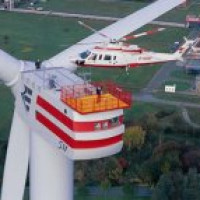
This is not what President-elect Barack Obama’s energy and climate strategists would want to hear. It would be anathema to Al Gore and other assorted luminaries touting renewable energy sources which in one giant swoop will save the world from the “tyranny” of fossil fuels and mitigate global warming. And as if these were not big enough issues, oilman T. Boone Pickens’ grandiose plan for wind farms from Texas to Canada is supposed to bring about a replacement for the natural gas now used for power generation. That move will then lead to energy independence from foreign oil.

Too good to be true? Yes, and in fact it is a lot worse.

Wind has been the cornerstone of almost all environmentalist and social engineering proclamations for more than three decades and has accelerated to a crescendo the last few years in both the United States and the European Union.

But Europe, getting a head start, has had to cope with the reality borne by experience and it is a pretty ugly picture.

Independent reports have consistently revealed an industry plagued by high construction and maintenance costs, highly volatile reliability and a voracious appetite for taxpayer subsidies. Such is the economic strain on taxpayer funds being poured into wind power by Europe’s early pioneers — Denmark, Germany and Spain – that all have recently been forced to scale back their investments.

As a result this summer, the U.K., under pressure to meet an ambitious E.U. climate target of 20 percent carbon dioxide cuts by 2020, assumed the mantle of world leader in wind power production. It did so as a direct consequence of the U.K. Government’s Renewables Obligations Certificate, a financial incentive scheme for power companies to build wind farms. Thus the U.K.’s wind operation provides the ideal case study — and one that provides the most complete conclusions.

The U.K. has all the natural advantages. It is the windiest country in Europe. It has one of the continent’s longest coastlines for the more productive (and less obtrusive) offshore farms. It has a long-established national power grid. In short, if wind power is less than successful in the U.K., its success is not guaranteed anywhere.

But wind infrastructure has come at a steep price. In fiscal year 2007-08 U.K. electricity customers were forced to pay a total of over $1 billion to the owners of wind turbines. That figure is due to rise to over $6 billion a year by 2020 given the government’s unprecedented plan to build a nationwide infrastructure with some 25 gigawatts of wind capacity, in a bid to shift away from fossil fuel use.

Ofgem, which regulates the U.K.’s electricity and gas markets, has already expressed its concern at the burgeoning tab being picked up by the British taxpayer which, they claim, is “grossly distorting the market” while hiding the real cost of wind power. In the past year alone, prices for electricity and natural gas in the U.K. have risen twice as fast as the European Union average according to figures released in November by the Organization for Economic Cooperation and Development. While 15 percent energy price rises were experienced across the E.U., in the U.K. gas and electricity prices rose by a staggering 29.7 percent. Ofgem believes wind subsidy has been a prime factor and questions the logic when, for all the public investment, wind produces a mere 1.3 percent of the U.K.’s energy needs.

In May 2008, a report from Cambridge Energy Research Associates warned that an over-reliance on offshore wind farms to meet European renewable energy targets would further create supply problems and drive up investor costs. No taxpayer respite there. But worse news was to come.

Read the rest of this story at Energy Tribune.

Comments 17 Comments »

Bad Behavior has blocked 1945 access attempts in the last 7 days.