Archive for May, 2009

Chaplin-Great-DictatorBy Marlo Lewis

Most media coverage of H.R. 2454, the American Clean Energy and Security Act  of 2009 (ACES), focuses on the bill’s cap-and-trade program and the free rationing coupons (emission allowances) that the bill’s co-sponsors, Reps. Henry Waxman (D-CA) and Ed Markey (D-MA), had to hand out to utilities and other interests to secure their support for the legislation.

But the cap-and-trade program occupies only one of four of the bill’s main sections (”titles”).  Other titles contain a host of mandates and “incentives” (carrots and sticks) to reshape energy and transportation markets.

Read the rest of this article at Open Market.

Comments 35 Comments »

president_official_portrait_lowresBy Martin Sieff

U.S. President Barack Obama has announced his long-projected new guidelines to cut fuel costs and increase U.S. auto efficiency. But his program looks certain to dramatically boost the costs of purchasing new cars for American consumers, putting a heavy new burden on the Detroit automakers who are already struggling to survive or staring bankruptcy in the face.

Calculations of the cost of the Obama plan vary. Administration officials admit the new standards will impose an increased cost of at least $1,300 on new cars by 2016. But the Environmental Protection Agency, which will enforce them, says that the savings in fuel efficiency will be so great that individual car purchasers will save that money back within 3.2 years of buying their new vehicles.

However, these projections seem to have included a significant amount of wishful thinking and blind guesswork. The projections were made without factoring in any serious inflation, but the huge increase in U.S. federal spending already approved by Obama and his Democrat-controlled 111th Congress guarantees that at the very least significant inflation will come, the worst in almost 30 years. And if the Chinese, Japanese and other state banks holding U.S. treasury bonds lose confidence in Obama’s management of the U.S. economy, it could trigger hyperinflation the likes of which have been seen in no major industrialized nation since the catastrophic hyperinflation of the Weimar Republic in Germany in 1923. Inflation could send car prices spiraling far higher than the extra $1,300 projected by the administration.

Obama unveiled the new plan, which was worked out in conjunction with the major U.S. automakers, Tuesday in a Rose Garden announcement. The new program is designed to greatly strengthen vehicle fuel efficiencies and establish limits on emissions from those vehicles. The White House outlined the rules it wants in effect in 2012 in a Monday briefing.

Read the rest of this article at UPI.

Comments 46 Comments »

Turning carbon into cold cash

Turning carbon into cold cash

From National Post

The closer the United States gets to adopting a cap-and-trade system to control greenhouse gas emissions, the more frightening it gets.

Not because the plan now under debate in the U. S. Congress would complicate the lives of energy producers, or impose new costs on consumers. Those drawbacks might be bearable if the system was truly designed to reduce emissions, and if the expense was reasonable. The alarm results from increasing evidence that emissions have become a secondary concern of a plan whose main purpose is to serve the partisan interests of the Democratic Party.

Jim Prentice, Canada’s Minister of the Environment, visited Washington this week to warn in no uncertain terms that the proposal before Congress would be a “prescription for disaster” for U. S. trade relations.

He was referring to “border tax adjustments” included in the U. S. bill, which would impose charges on goods imported from countries that do not match U. S. efforts to reduce emissions.

The charges are ostensibly intended to force countries like China and India to adopt similar emission-fighting measures. In reality, argued Mr. Prentice, they would act as “trade protectionism in the name of environmental protection,” allowing the United States to force up the price of imports to the benefit of American competitors. Mr. Prentice said Ottawa fully intends to match whatever greenhouse legislation the United States puts in place, but that might not avert the danger. It would still be up to Washington to decide whether it deemed Canadian protections adequate.

If Washington continues along the path toward discrimination, Mr. Prentice warned, Ottawa will take appropriate action — a clear hint at retaliation. A trade war would benefit no one, but would nonetheless likely be popular among labour unions, a traditional base of support for Democrats.

The U. S. plan would similarly boost Democrat fortunes by providing a multi-billion-dollar windfall to power producers largely clustered in states loyal to the party. As outlined by National Post columnist David Frum this week, the bill would include a system in which carbon emitters could buy the right to continue emitting by purchasing credits from cleaner companies. This is a key feature of cap-and-trade plans, but Democrats have stacked the deck by proposing to award allotments of emission credits, free of charge, to “clean” firms, which could then earn billions by selling them to big emitters.

Read the rest of this article at National Post.

Comments 25 Comments »

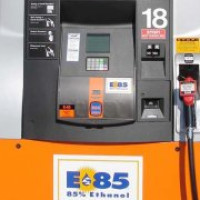
e85-pump01-180-cropped1By Paul Chesser

Never mind the allegedly detrimental effect biofuels have by increasing greenhouse gas emissions and therefore global warming — the Obama Administration will continue to blast CO2 in the atmosphere by burning vegetation. It’s not a surprise as the president talked about it during his campaign, but now the ugly details are coming out and the new subsidies are being unveiled. From a May 5  White House press release:

President Obama today announced steps to further his Administration’s commitment to advance biofuels research and commercialization.  Specifically, he signed a Presidential Directive establishing a Biofuels Interagency Working Group, announced additional Recovery Act funds for renewable fuel projects, and also announced his Administration’s notice of a Proposed Rulemaking on the Renewable Fuel Standard.

The BIWG is to be co-chaired by Obama’s superheroic force of top eco-bureaucrats: Agriculture Secretary Tom Vilsack, Energy Secretary Steven Chu, and EPA Administrator Lisa Jackson. Part of their responsibilities will be to:

  • Immediately begin restructuring existing investments in renewable fuels as needed to preserve industry employment; and
  • Develop a comprehensive approach to accelerating the investment in and production of American biofuels and reducing our dependence on fossil fuels.

Read the rest of this article at GlobalWarming.org.

Comments 8 Comments »

pigBy Timothy P. Carney

Rather than stopping the rise of the oceans, President Barack Obama’s push for greenhouse gas regulations is turning into another all-you-can-eat porkfest. As Rep. Henry Waxman, D-Calif., prepares to introduce a climate bill in the House Energy and Commerce Committee he chairs, big businesses and their well-connected lobbyists are lining up with the hope of getting rich off these regulations.
 
An early winner looks to be the power companies, represented in Washington by the Edison Electric Institute. U.S. automakers, soon to be controlled in part by the labor unions who so generously fund the Democratic Party, are also among a handful of likely beneficiaries of this legislation.
 
Waxman’s bill, set to be drafted in committee next week, is centered on a cap-and-trade mechanism for curbing greenhouse gas emissions. Under cap-and-trade, the government requires many GHG emitters, such as power plants and factories, to “pay for” their emissions with special credits, with government controlling the supply.
 
If an emitter needs more credits, he buys them on the open market from someone—another emitter or a dealer—who has excess credits. The question for lawmakers: How to allocate the credits originally. Environmentalists want Washington to auction them all. Affected industries want credits given away.
 
Considering the anti-business and pro-environment rhetoric of ruling Democrats, you might expect all businesses would have to pay for all emissions. But the rule of thumb in Washington—at least as true in Barack Obama and Nancy Pelosi’s Washington as it was in George W. Bush and Tom DeLay’s Washington—is that no important bill passes unless a well-connected special interest benefits from it. Following the rule, climate change legislation is starting to look like the stimulus bill: a buffet of handouts.
 
Currently, Waxman’s bill gives away about half the credits, with most free credits going to the power industry. Edison Electric, the trade group representing these companies, has endorsed this bill.
 
It’s unsurprising the power companies should get their way. Data compiled by the Center for Responsive Politics show that the electric utility industry’s political action committees contributed $12.3 million to candidates last election—more than the PACs of the oil and gas, commercial bank, investment, real estate, or telecom industries—and nearly as much as all defense PACs.
 
Last quarter, the Edison Electric Institute spent $2.6 million on lobbying, placing it 28th overall, just ahead of defense giant Boeing. The group retained 17 outside lobbying firms and employed at least 11 in-house lobbyists.
 
Early drafts of Waxman’s bill will also include GHG credit giveaways to some manufacturers that are “trade sensitive”—such as steelmakers and carmakers. These companies, of course, are also very well connected politically.
 
Then there’s the issue of how government should spend auction proceeds. General Electric, bailed out automakers promising green cars, and wind and solar investors are at the front of the queue to dig into this new trough of porkbarrel funds.

Read the rest of this piece at the Washington Examiner.

Comments 4 Comments »

Bad Behavior has blocked 1945 access attempts in the last 7 days.