Considered the climate Bible by governments around the world, the UN’s Intergovernmental Panel on Climate Change (IPCC) report is meant to be a scientific analysis of the most authoritative research.
Instead, it references literature generated by Greenpeace – an organization known more for headline-grabbing publicity stunts than sober-minded analysis. (Eight IPCC-cited Greenpeace publications are listed at the bottom of this post.)
In one section of this Nobel-winning report, climate change is linked to coral reef degradation. The sole source for this claim? A Greenpeace report titled “Pacific in Peril“ (see Hoegh-Guldberg below). Here the report relies on a Greenpeace document to establish the lower-end of an estimate involving solar power plants (Aringhoff).
When discussing solar energy elsewhere, the report references two Greenpeace documents in one sentence. Here it uses a Greenpeace paper as its sole means of documenting where the “main wind-energy investments” are located globally (Wind).
On this page, the report notes that while some research suggests wind power will generate between three and five percent of global electricity by 2030, a more optimistic forecast places this number at 29%. The six times more favorable estimate comes from GWEC, 2006 – a 60-page, photo-rich report co-authored by Greenpeace and the Global Wind Energy Council. (The latter describes itself as “the global wind industry trade association.”) In fairness to the IPCC, even it rejectedGreenpeace’s numbers, choosing instead to use 7% in its analysis.
Confidence Melting Away: Doubts Grow in Climate Change Debate
By Gerald Traufetter
The Siachen Glacier is home to the world’s highest crisis region. Here, at 6,000 meters (19,680 feet) above sea level, Indian and Pakistani soldiers face off, ensconced in heavily armed positions.
The ongoing border dispute between the two nuclear powers has already claimed the lives of 4,000 men — most of them having died of exposure to the cold.
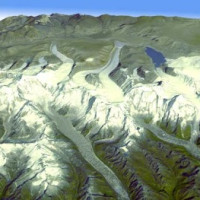
Now the Himalayan glacier is also at the center of a scientific dispute. In its current report, the Intergovernmental Panel on Climate Change (IPCC) predicts that the glacier, which is 71 kilometers (44 miles) long, could disappear by 2035. It also predicts that the other 45,000 glaciers in the world’s highest mountain range will be virtually gone by then, with drastic consequences for billions of people in Asia, whose life depends on water that originates in the Himalayas. The IPCC report led environmental activists to sound the alarm about a drama that could be unfolding at the “world’s third pole.”
“This prognosis is, of course, complete nonsense,” says John Shroder, a geologist and expert on glaciers at the University of Nebraska in Omaha. The results of his research tell a completely different story.
For the past three decades, the US glaciologist has been traversing the majestic mountains of the Himalayan region, particularly the Karakorum Range, with his measuring instruments. The discoveries he has made along the way are not consistent with the assessment long held by the IPCC. “While many glaciers are shrinking, others are stable and some are even growing,” says Shroder.
Untenable Claim
The gaffe over the Himalayan glaciers has triggered an outcry in the world of climatology. Some are already using the word “Glaciergate” in reference to the scandal over a scientifically untenable claim in the fourth IPCC assessment report, which the UN climate body publishes every five years. The fourth assessment report was originally published in 2007. Last week, the IPCC withdrew the erroneous claim and apologized for the error.
German Environment Minister Norbert Röttgen, a member of the center-right Christian Democratic Union (CDU), is also upset about the incident. “The error in the IPCC report is serious and should not have happened,” Röttgen told SPIEGEL. “Scientific accuracy is a vital condition to support the credibility of the political conclusions we draw as a result.” Although the minister still has confidence in the overall validity of the IPCC report, he wants to see “a thorough investigation into how the error originated and was communicated.”
But why wasn’t this clearly nonsensical claim noticed long ago by at least one of the 3,000 scientists who contributed to the IPCC report? “What’s really amazing is that such a blunder remained uncorrected for so long,” says Shroder.
Global Warming: If we’re serious about restoring science to its rightful place, the head of the U.N.’s panel on climate change should step down. Evidence shows he quarterbacked a deliberate and premeditated fraud.The U.N.’s Intergovernmental Panel on Climate Change has been forced to back off its now-discredited claim that the Himalayan glaciers would soon disappear. But it’s not true, the panel’s vice chairman, Jean-Pascal van Ypersele, told the BBC, that it was simply a “human mistake.”
The panel’s chairman, Dr. Rajendra K. Pachauri, who was forced to admit the claim had no basis in observable scientific fact, said its inclusion was merely a “poor application” of IPCC procedures, acting as if the original source of the claim, Indian scientist Dr. Syed Hasnain, was a total stranger.
In fact, as Christopher Booker of the London Telegraph points out, Dr. Hasnain “has for the past two years been working as a senior employee of the Energy and Resources Institute (TERI), the Delhi-based company of which Dr. Pachauri was director-general.”
So after the 2007 assessment that included Hasnain’s claim, Pachauri was impressed enough to hire him as an employee. Pachauri should have been familiar with both his work and the fact the claim had not been peer-reviewed, and aware that it had been challenged by reputable geologists.
At his BBC blog Andrew Neil lays out the itemized fraud from the 2007 UN IPCC report that has been rolling out in recent days, previously reported by the BBC and other formerly mainstream media as “sound” and “consensus” science. So many “Gates,” and so many discredited reporters:
This turned out to have no basis in scientific fact, even though everything the IPCC produces is meant to be rigorously peer-reviewed, but simply an error recycled by the [World Wildlife Fund], which the IPCC swallowed whole….
Then at the weekend another howler was exposed. The IPCC 2007 report claimed that global warming was leading to an increase in extreme weather, such as hurricanes and floods. Like its claims about the glaciers, this was also based on an unpublished report which had not been subject to scientific scrutiny — indeed several experts warned the IPCC not to rely on it.
Now after Climate-gate, Glacier-gate and Hurricane-gate — how many “gates” can one report contain? — comes Amazon-gate. The IPCC claimed that up to 40 percent of the Amazonian forests were risk from global warming and would likely be replaced by “tropical savannas” if temperatures continued to rise.
This claim is backed up by a scientific-looking reference but on closer investigation turns out to be yet another non-peer reviewed piece of work from the WWF. Indeed the two authors are not even scientists or specialists on the Amazon: one is an Australian policy analyst, the other a freelance journalist for the Guardian and a green activist.
Yep, this is the “scientific consensus” that Al Gore based his post-VP life upon; the imagined groundswell that so many politicians used to justify government growth; the nonexistent evidence that journalists cited to justify their alarmism activism.
Why have we had eight years of global cooling when all the global climate models projected eight years of warming?
If polar bears are endangered by global warming, why have bear populations more than doubled in the last 50 years?
Minimum Arctic ice in 2007 was trumpeted by the press, but why was maximum Antarctic ice in 2007 hardly mentioned?
After building more than 20,000 wind turbine towers, why have Germany and Denmark been unable to close a single coal-fired power plant?
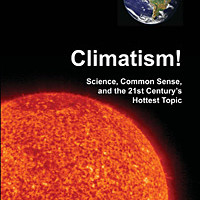
“This is a serious book that carefully examines the issues that have been used to create the current climate change/global warming crisis… I endorse Climatism! for its easy-to-read, well-illustrated presentation of complex science.” -John Coleman, Meteorologist
Advance orders of Climatism! Science, Common Sense and the 21st Century’s Hottest Topic by Steve Goreham here: http://www.climatism.net/
CBS News Investigative correspondent Sharyl Attkissonreports official filings and our own investigation show at least 106 people from the House and Senate attended – spouses, a doctor, a protocol expert and even a photographer.
For 15 Democratic and 6 Republican Congressmen, food and rooms for two nights cost $4,406 tax dollars each. That’s $2,200 a day – more than most Americans spend on their monthly mortgage payment.
CBS News asked members of Congress and staff about whether they’re mindful that it’s public tax dollars they’re spending. Many said they had never even seen the bills or the expense reports.
Rep. Henry Waxman, D-Calif., is a key climate change player. He went to Copenhagen last year. Last week, we asked him about the $2,200-a-day bill for room and food.
“I can’t believe that,” Rep. Waxman said. “I can’t believe it, but I don’t know.”
But his name is in black and white in the expense reports. The group expense report was filed by House Speaker Nancy Pelosi, D-Calif. She wouldn’t talk about it when our producer tried to ask.
The chairman of the UN’s Intergovernmental Panel on Climate Change (IPCC), has used bogus claims that Himalayan glaciers were melting to win grants worth hundreds of thousands of pounds.
Rajendra Pachauri’s Energy and Resources Institute (TERI), based in New Delhi, was awarded up to £310,000 by the Carnegie Corporation of New York and the lion’s share of a £2.5m EU grant funded by European taxpayers.
It means that EU taxpayers are funding research into a scientific claim about glaciers that any ice researcher should immediately recognise as bogus. The revelation comes just a week after The Sunday Times highlighted serious scientific flaws in the IPCC’s 2007 benchmark report on the likely impacts of global warming.
The IPCC had warned that climate change was likely to melt most of the Himalayan glaciers by 2035 – an idea considered ludicrous by most glaciologists. Last week a humbled IPCC retracted that claim and corrected its report.
Since then, however, The Sunday Times has discovered that the same bogus claim has been cited in grant applications for TERI.
One of them, announced earlier this month just before the scandal broke, resulted in a £310,000 grant from Carnegie.
The scientist behind the bogus claim in a Nobel Prize-winning UN report that Himalayan glaciers will have melted by 2035 last night admitted it was included purely to put political pressure on world leaders.
Dr Murari Lal also said he was well aware the statement, in the 2007 report by the Intergovernmental Panel on Climate Change (IPCC), did not rest on peer-reviewed scientific research.
In an interview with The Mail on Sunday, Dr Lal, the co-ordinating lead author of the report’s chapter on Asia, said: ‘It related to several countries in this region and their water sources. We thought that if we can highlight it, it will impact policy-makers and politicians and encourage them to take some concrete action.
‘It had importance for the region, so we thought we should put it in.’
Dr Lal’s admission will only add to the mounting furore over the melting glaciers assertion, which the IPCC was last week forced to withdraw because it has no scientific foundation.
According to the IPCC’s statement of principles, its role is ‘to assess on a comprehensive, objective, open and transparent basis, scientific, technical and socio-economic information – IPCC reports should be neutral with respect to policy’.
The claim that Himalayan glaciers are set to disappear by 2035 rests on two 1999 magazine interviews with glaciologist Syed Hasnain, which were then recycled without any further investigation in a 2005 report by the environmental campaign group WWF.
It was this report that Dr Lal and his team cited as their source.
The WWF article also contained a basic error in its arithmetic. A claim that one glacier was retreating at the alarming rate of 134 metres a year should in fact have said 23 metres – the authors had divided the total loss measured over 121 years by 21, not 121.
Last Friday, the WWF website posted a humiliating statement recognising the claim as ‘unsound’, and saying it ‘regrets any confusion caused’.
Dr Lal said: ‘We knew the WWF report with the 2035 date was “grey literature†[material not published in a peer-reviewed journal]. But it was never picked up by any of the authors in our working group, nor by any of the more than 500 external reviewers, by the governments to which it was sent, or by the final IPCC review editors.’
In fact, the 2035 melting date seems to have been plucked from thin air.
Professor Graham Cogley, a glacier expert at Trent University in Canada, who began to raise doubts in scientific circles last year, said the claim multiplies the rate at which glaciers have been seen to melt by a factor of about 25.
‘My educated guess is that there will be somewhat less ice in 2035 than there is now,’ he said.
‘But there is no way the glaciers will be close to disappearing. It doesn’t seem to me that exaggerating the problem’s seriousness is going to help solve it.’
One of the problems bedevilling Himalayan glacier research is a lack of reliable data. But an authoritative report published last November by the Indian government said: ‘Himalayan glaciers have not in any way exhibited, especially in recent years, an abnormal annual retreat.’
When this report was issued, Raj Pachauri, the IPCC chairman, denounced it as ‘voodoo science’.
Two months after “climategate” cast doubt on some of the science behind global warming, new questions are being raised about the reliability of a key temperature database, used by the United Nations and climate change scientists as proof of recent planetary warming.
Two American researchers allege that U.S. government scientists have skewed global temperature trends by ignoring readings from thousands of local weather stations around the world, particularly those in colder altitudes and more northerly latitudes, such as Canada.
In the 1970s, nearly 600 Canadian weather stations fed surface temperature readings into a global database assembled by the U.S. National Oceanic and Atmospheric Administration (NOAA). Today, NOAA only collects data from 35 stations across Canada.
Worse, only one station — at Eureka on Ellesmere Island — is now used by NOAA as a temperature gauge for all Canadian territory above the Arctic Circle.
The Canadian government, meanwhile, operates 1,400 surface weather stations across the country, and more than 100 above the Arctic Circle, according to Environment Canada.
Yet as American researchers Joseph D’Aleo, a meteorologist, and E. Michael Smith, a computer programmer, point out in a study published on the website of the Science and Public Policy Institute, NOAA uses “just one thermometer [for measuring] everything north of latitude 65 degrees.”
Both the authors, and the institute, are well-known in climate-change circles for their skepticism about the threat of global warming.
Mr. D’Aleo and Mr. Smith say NOAA and another U.S. agency, the NASA Goddard Institute for Space Studies (GISS) have not only reduced the total number of Canadian weather stations in the database, but have “cherry picked” the ones that remain by choosing sites in relatively warmer places, including more southerly locations, or sites closer to airports, cities or the sea — which has a warming effect on winter weather.
Over the past two decades, they say, “the percentage of [Canadian] stations in the lower elevations tripled and those at higher elevations, above 300 feet, were reduced in half.”
Using the agency’s own figures, Smith shows that in 1991, almost a quarter of NOAA’s Canadian temperature data came from stations in the high Arctic. The same region contributes only 3% of the Canadian data today.
Mr. D’Aleo and Mr. Smith say NOAA and GISS also ignore data from numerous weather stations in other parts of the world, including Russia, the U.S. and China.
They say NOAA collects no temperature data at all from Bolivia — a high-altitude, landlocked country — but instead “interpolates” or assigns temperature values for that country based on data from “nearby” temperature stations located at lower elevations in Peru, or in the Amazon basin.
The result, they say, is a warmer-than-truthful global temperature record.
“NOAA . . . systematically eliminated 75% of the world’s stations with a clear bias towards removing higher latitude, high altitude and rural locations, all of which had a tendency to be cooler,” the authors say. “The thermometers in a sense, marched towards the tropics, the sea, and to airport tarmacs.”
Scott Brown’s historic victory on Tuesday in Massachusetts has a lot of people asking the question whether there’s a new day dawning in American politics. This video does a pretty good job of framing the issue.
As Global Warming Movement Collapses, Activists Already ‘Test-Marketing’ the Next Eco-Fear! ‘Laughing Gas’ Crisis? Oxygen Crisis? Plastics?
Global Warming Being Thrown Under the Bus as New Replacement Environmental Scare is Sought
By Marc Morano
As the man-made global warming fear movement collapses and the climate establishment lay in a Climategate ridden tatters, many are asking what next? (For latest on climate movement’s demise go to www.ClimateDepot.com)
As man-made global warming fears enter the ashbin of history, what will environmentalists, UN activists and politicians do to fill the void of a failed eco-scare?
Well, wonder no more….
Some forward thinking green activists and even the UN climate Chief have already taken up the task of test-marketing the next eco-scares to replace man-made global warming.
As man-made climate fears subside and the scientific, economic, cultural and political case evaporates for climate change “action,” expect more and more green activists to take up the mantle for “laughing gas” as a possible replacement eco-scare.
See also: Laughing Gas Knocks Out CO2 – By Doug Hoffman – Oct. 30, 2009 – Excerpt: “In the face of ever mounting evidence that CO2 is incapable of causing the level of global devastation prophesied by climate change catastrophists a new villain is being sought. The leading candidate is nitrous oxide (N2O), better known as laughing gas. A report in Science claims that N2O emissions are currently the single most important cause of ozone depletion and are expected to remain so throughout the 21st century. The IPCC rates N2O as 310 times as potent a greenhouse gas as CO2 on a 100 year time scale. Is this a greenhouse gas bait and switch, or are the global warming alarmists trying to up the ante.”
Still can’t picture former Vice President Al Gore touting the “laughing gas” crisis as the “moral” challenge of our time in a Oscar-winning documentary? Not to worry, there are many more eco-scares currently being test-marketed.
Plastics
Gore’s own producer of “An Inconvenient Truth” — Hollywood eco-activist Laurie David — is already test-marketing another eco-scare with potential promise.
“The rapid rise in global plastic production is leading to a rise in plastic pollution and its devastating effects on our oceans and our lives.,” Laurie David wrote on July 31, 2009. Selected Excerpts From David’s blog post: “This insidious invasion of the biosphere by our plastic waste is in some ways more alarming for us humans than global warming. Our bodies have evolved to handle carbon dioxide, the nemesis of global warming, indeed, we exhale it with every breath. Plastic, though present in the biosphere from the nano scale on up, is too stable a molecule for any organism to fully assimilate or biodegrade. So we have a situation in which a vector for a suite of devastating chemicals, chemicals implicated in many modern diseases, is now invading the ocean, our bodies and indeed, the entire biosphere. The prognosis for improvement in this situation is grim.”
Still not convinced of either “laughing gas” or “plastics” as the next dominant eco-scare? Don’t worry, we are just getting started.
Just how widespread is the test marketing of a new eco-scare to replace the flailing global warming movement?
Fresh doubts were cast over controversial global warming theories yesterday after a major climate change argument was discredited.
The International Panel on Climate Change was forced to admit its key claim that Himalayan glaciers would melt by 2035 was lifted from a 1999 magazine article. The report was based on an interview with a little-known Indian scientist who has since said his views were “speculation†and not backed up by research.
It was also revealed that the IPCC’s controversial chairman, Dr Rajendra Pachauri, described as “the world’s top climate scientistâ€, is a former railway engineer with a PhD in economics and no formal climate science qualifications.
Dr Pachauri was yesterday accused of a conflict of interest after it emerged he has a network of business interests that attract millions of pounds in funding thanks to IPCC policies. One of them, The Energy Research Institute, has a London office and is set to receive up to £10million from British taxpayers over the next five years in the form of grants from the Department for International Development.
Dr Pachauri denies any conflict of interest arising from his various roles.
Yesterday, critics accused the IPCC of boosting the man-made global warming theory to protect a multi-million pound industry.
Climate scientist Peter Taylor said: “I am not surprised by this news. A vast bureaucracy and industry has been built up around this theory. There is too much money in it for the IPCC to let it wither.â€
A special election will be held this week in Massachusetts that could determine the outcome of much of President Obama’s agenda. Republican candidate Scott Brown has stated he is opposed to the President’s cap-and-trade bill, which would cost the American taxpayer trillions of dollars. Democrats have controlled this senate seat for nearly 60 years, so a win for Brown would appear to be truly a miracle. Polls have the Brown and his Democratic opponent in nearly a statistical tie going into the election.