Archive for the “Global Cooling” Category
High snowfall and cold weather to blame.
By Michael Asher
A bitterly cold Alaskan summer has had surprising results. For the first time in the area’s recorded history, area glaciers have begun to expand, rather than shrink. Summer temperatures, which were some 3 degrees below average, allowed record levels of winter snow to remain much longer, leading to the increase in glacial mass.“In mid-June, I was surprised to see snow still at sea level in Prince William Sound”, said glaciologist Bruce Molnia. “In general, the weather this summer was the worst I have seen in at least 20 years”.
“On the Juneau Icefield, there was still 20 feet of new snow on the surface [in] late July. At Bering Glacier, a landslide I am studying [did] not become snow free until early August.”
Molnia, who works for the US Geological Survey, said it’s been a “long time” since area glaciers have seen a positive mass balance — an increase in the total amount of ice they contain.
Since 1946, the USGS has maintained a research project measuring the state of Alaskan glaciers. This year saw records broken for most snow buildup. It was also the first time since any records began being that the glaciers did not shrink during the summer months.
Those records date from the mid 1700s, when the region was first visited by Russian explorers. Molnia estimates that Alaskan glaciers have lost about 15% of their total area since that time — an area the size of Connecticut.
Read the rest of this story at Daily Tech.
8 Comments »
From Utah’s Daily HeraldÂ
A week ago Utah joined in announcing a plan to fight global warming — but the real danger lies in cooling: the cooling of the world’s climate, and the chilly outlook for the state’s economy.
The Western Climate Initiative has trumpeted a cap-and-trade system to cut carbon emissions and thus fight “greenhouse gasses.” Joining the Beehive State in the proposal are six other Western states and four Canadian provinces.In cap-and-trade programs, businesses are allowed to pump out certain levels of substances such as carbon dioxide and methane. If emissions exceed statutory levels, the businesses have to pay the government. If they are under that level, they can trade those credits to other enterprises.
Utah would have to pass legislation to implement these ideas. But they couldn’t have been announced at a worse time.
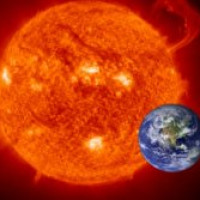
The news indicates that, if anything, our planet is growing not hotter but colder. Recently, NASA’s Ulysses project reported that the intensity of the sun’s solar wind — a flow of charged particles — is at its lowest point of the Space Age. This adds to the mounting evidence that the Sun’s activity is decreasing, and could signal the start of an era of cold weather, as in the Little Ice Age from the mid-16th century to the middle of the 19th century.
Four major agencies that keep track of the Earth’s temperature agree that the Earth cooled 0.7 degrees Celsius in 2007, the biggest such dip on record. In short, as Utah and other states panic over global warming, global cooling may be the bigger threat.
The real danger posed by the notion of global warming is that it will put the economy into a deep freeze. Utah’s own experts already predict a sluggish economy, at best, through 2009. The Legislature has just finished slashing $270 million from the state’s budget. Meanwhile, the “meltdown” in the credit markets has Washington scrambling for answers. This is the worst time in the past half-dozen years to place added strains on the state’s economy.
Read the rest of this piece at the Daily Herald.
5 Comments »

By Lawrence Solomon
In yet another sign that the Earth could be heading in to a period of global cooling, NASA reports that the solar wind is now at a 50-year low, the lowest that NASA has seen. This change in solar activity, which began to occur about a decade ago, coincides with the end of the climb in global temperatures that had been underway for decades.
“What we’re seeing is a long term trend, a steady decrease in pressure that began sometime in the mid-1990s,” explains Arik Posner, NASA’s Ulysses Program Scientist in Washington DC.
“How unusual is this event?
“It’s hard to say. We’ve only been monitoring solar wind since the early years of the Space Age—from the early 60s to the present. Over that period of time, it’s unique. How the event stands out over centuries or millennia, however, is anybody’s guess. We don’t have data going back that far.”
Read the rest of this story at National Post (Canada).
6 Comments »
By Jimmy WestlakeÂ
There are few things in our lives that seem as constant and dependable as the sun. Day after day, it provides the warmth and energy that we must have to survive on this planet. Without it, Earth would be in an unimaginable deep freeze near absolute zero.
So, it comes as a bit of surprise when we learn the sun is misbehaving a bit and not following its usual routine. The routine is this: Every 11 years, the number of sunspots and other active regions on the sun reach a frenzy of activity, followed by a period of relative calm. Like a heartbeat of cosmic proportions, this 11-year rise and fall in solar activity has gone on for decades, even centuries, with few interruptions. The last solar maximum occurred between the years 2001 and 2002, when giant sunspots and record-breaking solar flares erupted into space. Clouds of charged particles from the sun generated brilliant displays of the Northern Lights over Colorado and points even farther south. Since then, solar activity has waned, as expected when nearing the end of a solar cycle and another solar minimum.
The problem is that this solar minimum is lasting for an uncomfortably long time. The average solar cycle lasts for 131 months, or about 10.9 years. The current cycle already has lasted 144 months (12 years) and we are still counting. Sunspots during the last two years have been scarcer than hen’s teeth, and the few that have appeared have been tiny and short-lived. Every morning, I check out the daily image of the sun on www.spaceweather.com and scan for sunspots, but every day it’s the same story: “The sun is blank today — zero sunspots.†The last time the sunspot cycle went into extended hibernation was during the so-called Maunder Minimum between the years 1645 and 1715. This period coincided with Europe’s “Little Ice Age,†one of the most dramatic episodes of global cooling in recorded history.
Read the rest of this piece at Steamboat Pilot & Today.
7 Comments »
By Bill CarmichaelÂ
THIS may sound perverse, but as the country seemingly writes off Gordon Brown as a dead loss, I’m finding strong reasons why his beleaguered administration deserves our support.
Why? Simply because Labour is the only major political party to take seriously one of the gravest problems facing the UK over the next decade – the looming energy crisis.
According to Ian Fells, Emeritus Professor of Energy at Newcastle University, we are likely to see severe power shortages emerging any time between 2012 and 2015 because of the growing gap between supply capacity and expected demand.
Â
Prof Fells warns the UK could be hit by repeated power cuts that would shut down public transport, reduce hospital services and cause chaos in supermarkets and offices.
The impact on our economy would be devastating – far more serious than the last major power cuts in the 1970s when computing power, email and mobile phones were not the essential business tools that they are today.
As Prof Fells put it: “Electricity is the life blood of civilisation. Without it we spiral down into anarchy and chaos.”
Yet the response from our political class to this very real threat has been little short of pathetic. The Tories seem to think if everyone straps a little windmill to the roofs of their Notting Hill townhouses then everything will be okay. The Lib Dems, meanwhile, have forfeited the right to be taken seriously on energy by swallowing the lunacies of the eco-fundamentalists hook, line and sinker – no coal, no gas, no nuclear.
It’s true that for more than 10 years Labour has neglected its duty to secure future energy supplies, but at last there are some signs that Ministers are beginning to recognise the urgency of the problem.
Business Secretary John Hutton told the Labour Party conference that clean coal technology and a “renaissance in nuclear power” were needed if we weren’t to leave ourselves at the mercy of gas imports from unstable and unfriendly foreign regimes. He bluntly told delegates: “No coal plus no nuclear equals no lights. No power. No future.”
Contrast this with David Cameron’s pandering to fashionable eco-opinion. His most notable contribution to the debate was to borrow a private jet so he could hold a photo-opportunity on an Arctic glacier.
What Labour have grasped, but the Tories have not, is that in the current economic climate green politics are a complete dead duck. Obsessions about global warming – or is it global cooling now? – are indulgences tolerated in an affluent society when there isn’t anything more serious to worry about. In hard times, thoughts inevitably turn to more pressing matters, like trying not to freeze to death.
Read the rest of this piece at the Yorkshire Post.
No Comments »
“I guess hard times flush out the chumps.” – from O Brother Where Art ThouÂ
By Les MacPhersonÂ
If I was a con artist, I’d be moving right about now from the Nigerian letter scam, which is pretty much exhausted, and into the sale of phony carbon credits.
There is no better opportunity right now to fleece the gullible. You could take their money, give them worthless carbon certificates in return and leave them feeling good about it. So good, they’d keep coming back for more.
Unlike most other scams, this one could work indefinitely on the same suckers. Only by starting a new religion could the unscrupulous do as well.
It figures that both carbon credits and religion deal in guilt, fear and redemption. Indeed it was religion that established the pattern for carbon credits. The idea in both cases is to sell forgiveness to sinners.
In medieval Europe, corrupt clergy raised money through the sale of what they called indulgences. These were certificates of forgiveness sold to sinners as an alternative to eternal damnation. The beauty of it was that eternal damnation was promoted by the same people who sold the indulgences. It was the perfect racket until that pesky Martin Luther came along and spoiled everything.
Carbon credits work much the same way, only in this case, the religion is environmentalism. The sin is to live in a big house, say, or to drive a gas-guzzler or to fly around in a big jet airliner. These things require lots of fossil fuel, the burning of which generates carbon dioxide which contributes to global warming, the environmental equivalent of eternal damnation. Never mind that climatologists are now telling us to expect 20 or 30 years of global cooling. It’s like a doomsday sect that has to keep moving the date when the predicted apocalypse fails to materialize. The difference is that most of us laugh at doomsday sects.
The threat of global warming, a lot of people take very seriously, but they still want their hot tubs and their SUVs and their tropical vacations. Carbon credits offer them a way to maintain their self-indulgent lifestyles while remaining environmentally virtuous. Instead of reducing their own carbon emissions, they can pay someone else to do it.
Campaigning politicians, among others, are already signing on. The federal NDP and Liberals have bought carbon credits to offset emissions from their leaders’ campaign jets. Sufficient credits to offset NDP Leader Jack Layton’s campaign tour, for example, reportedly will cost the New Democrats about $60,000. It’s enough to make a grifter salivate.
Liberals can expect to pay even more. Their leader has leased for his campaign tour an older jet that emits 30 per cent more carbon than a more modern aircraft. This doesn’t look good for a party that’s campaigning to compel the rest of us to reduce our own carbon emissions. Through the miracle of carbon credits, their guilt is washed away.
Read the rest of this piece at the Star Phoenix (Canada).
6 Comments »
From Stock & Land
Australia – The sudden change of focus from global warming to global cooling by leading environment group World Wide Fund for Nature (WWF) demonstrates the lack of substance to the argument that manmade carbon emissions are responsible for global warming, according to Senator Boswell.
The prominent NP senator for Qld says, “The WWF now claims that recent freezing temperatures in Sydney are proof of the urgent need to cut carbon pollution.
“Does that mean that global warming causes global cooling?
“Does that mean that we should be increasing emissions in order to cool the earth or increasing them to warm it back up?â€
“I though we were concerned with the perils of global warming – that we had to act immediately to stop temperatures and water levels rising and inflicting untold disasters.
“Now the WWF wants us to believe that manmade carbon emissions are responsible for colder temperatures.â€
Senator Boswell says that the Rudd government’s carbon pollution reduction scheme is built on the assumption of man-made global warming.
“Which is it – are temperatures going up or down?†he asks.
“Cooling temperatures are what I would call a very inconvenient truth for the green movement.
Read the rest of this story at Stock & Land
5 Comments »
By David Tirrell-Wysocki, Associated Press Writer
DUBLIN, N.H. — The Old Farmer’s Almanac is going further out on a limb than usual this year, not only forecasting a cooler winter, but looking ahead decades to suggest we are in for global cooling, not warming.
Based on the same time-honored, complex calculations it uses to predict weather, the Almanac hits the newsstands on Tuesday saying a study of solar activity and corresponding records on ocean temperatures and climate point to a cooler, not warmer, climate, for perhaps the next half century.
“We at the Almanac are among those who believe that sunspot cycles and their effects on oceans correlate with climate changes,” writes meteorologist and climatologist Joseph D’Aleo. “Studying these and other factor suggests that cold, not warm, climate may be our future.”
It remains to be seen, said Editor-in-Chief Jud Hale, whether the human impact on global temperatures will cancel out or override any cooling trend.
“We say that if human beings were not contributing to global warming, it would become real cold in the next 50 years,” Hale said.
For the near future, the Almanac predicts most of the country will be colder than normal in the coming winter, with heavy snow from the Ozarks into southern New England. Snow also is forecast for northern Texas, with a warmer than usual winter in the northern Plains.
Almanac believers will prepare for a hot summer in much of the nation’s midsection, continuing drought conditions there and wild fire conditions in parts of California, with a cooler-than-normal season elsewhere. They’ll also keep the car packed for the 2009 hurricane season, as the Alamanac predicts an active one, especially in Florida.
But Editor Janice Stillman said it’s the winter foreasts that attract the most attention, especially this year, with much higher heating prices.
So, in line with the weather and economy forecasts, the Almanac includes information on using wood for heat: the best wood, how to build a fire in a fireplace, whether to use a wood stove and how to stay warm — all winter — with a single log.
Here’s the secret, popularized in 1777: Throw a log out an upstairs window, dash down the stairs and outside, retrieve the log, dash upstairs, throw the log out the window and so on.
“Do that until you work up a sweat and you’ll be warm all winter,” said Stillman.
Last year, the Almanac correctly predicted “above-normal” snowfall in the Northeast — an understatement — and below-normal snowfall in the mid-Atlantic states.
New Hampshire, home of the Almanac, saw the most snow in 134 years and missed an all-time record by 2.6 inches.
Read the rest of this story at USA Today.
No Comments »
By Alan Caruba
There’s a wonderful irony in the fact that, back in the 1970s, the Greens were issuing warnings and even writing books about the coming Ice Age. They would abandon this issue, based in well-known and accepted solar science, in favor of a vast international hoax alleging man-made global warming.
As the global warming hoax begins to lose its power to influence public opinion and policy, the Greens are not likely to be heeded for a long time to come because they were right about an Ice Age and lying through their teeth about global warming.
Scientists and laymen who follow the Ice Age cycles have been warning that, if not a full-fledged Ice Age, at the very least a Little Ice Age comparable to one that lasted from 1300 to around 1850 is on its way
Amidst all the media coverage of Hurricane Gustav and the Republican Convention, a report in DailyTech.com was not likely to get much attention, but it forecast a very cold world in the years to come. The Earth has already started to cool and scientists date the change from 1998.
Headlined, “Drop in solar activity has potential effect for climate on Earth”, the news is that, for the first time in 100 years, “an entire month has passed without a single visible sunspot being noted.” The author, Michael Asher, noted that “The event is significant as many climatologists now believe solar magnetic activity-which determines the number of sunspots-is an influencing factor for climate on Earth.”
My friend, Robert W. Felix, wrote an excellent book on this titled “Not by Fire, but by Ice” ($15.00, Sugarhouse Publishing, softcover, second edition) which can be purchased from his website at IceAgeNow.com.
“We’re beginning to realize that Earth is a violent and dangerous place to live,” wrote Felix. “We’re beginning to realize that mass extinctions have been the rule, rather than the exception, for the 3.5 billion years that life has existed on Earth.”
Felix has a new book soon to be published that addresses magnetic reversals, another cyclical factor affecting life on Earth. “During the last 4.5 million years, at least six out of nine radiolarian extinctions occurred at magnetic reversals.” They appear to be a factor in the sudden emergence of new species so Darwin’s theory is likely to be reexamined.
As the DailyTech report notes, “In the past 1000 years, three previous such events, the Dalton, Maunder, and Sporer Minimums,” of reduced sunspot activity, “have all led to rapid cooling,” adding that, “For a society dependent on agriculture, cold is more damaging than heat. The growing season shortens, yields drop, and the occurrence of crop-destroying frosts increases.”
An article by William Livingston and Matthew Penn of the National Solar Observatory in Tucson, Arizona, “Sunspots May Vanish by 2015″, predicts that sunspots will disappear completely. “Such an event would not be unprecedented, since during a famous episode from 1645-1715, known as the Maunder Minimum…” That solar cycle “was shown to correspond with the reduced average global temperatures on the Earth.” In other words, it’s going to get COLD.
Read the rest of this piece at Right Side News.
2 Comments »
These days, everything under the sun is caused by global warming. If it’s hot, it’s because of global warming. If it’s cold, it’s because of global warming. If it’s dry, it’s because of global warming, and if it’s rainy, it’s because of global warming. Naturally, if a hurricane develops and makes landfall, that’s because of global warming, too.
“The big picture is that global warming is putting hurricanes on steroids,” says Dr. Amanda Staudt of the National Wildlife Federation.
It was predictable that global warming alarmists would use the latest hurricane as an example of the devastation wrought by out of control man-made global warming. Never mind that hurricanes and tropical storms have dashed apart ships that were powered by wind hundreds of years ago. This is different. These are new global warming hurricanes, “on steroids.” Scary.
Regardless of the alarmist global warming hype Americans have been deluged with as coverage of Hurricane Gustav unfolded, new studies and scientific perspectives are calling into question the global warming – hurricane link.
A study in the March 2008 Bulletin of the American Meteorological Society suggests that global warming should reduce the frequency and intensity of hurricanes. There seem to be some mixed signals going on in global warming research.
Kerry Emanuel, an MIT professor of atmospheric science published a trumpeted paper in 2005 claiming that hurricane strengths would double as a result of global warming. Unfortunately, the latest computer models show no significant increase in hurricane frequency or intensity when they turn up the computer’s thermostat. The AMS study, which Emanuel co-authored contradicts his famous paper from three years ago.
“One gets used to being mistaken, and we follow the evidence and sometimes the evidence is contradictory and then we have to sort it out,” Emanuel said of the new findings. He’s uncertain whether the recent output is correct or the result of faulty models. “There is a real conundrum here,” he said.
Climate computer modeling scientists don’t even trust their own work and this is the sort of data legislators are using to make monumental decisions to attempt controlling the Earth’s climate system. The scientific position on hurricanes at present appears to be that global warming will and won’t intensify hurricane force and frequency.
11 Comments »
There’s Something Rotten North of DenmarkÂ
By Steven Goddard
Just a few weeks ago, predictions of Arctic ice collapse were buzzing all over the internet. Some scientists were predicting that the “North Pole may be ice-free for first time this summer”. Others predicted that the entire “polar ice cap would disappear this summer”.
The Arctic melt season is nearly done for this year. The sun is now very low above the horizon and will set for the winter at the North Pole in five weeks. And none of these dire predictions have come to pass. Yet there is, however, something odd going on with the ice data.
The National Snow and Ice Data Center (NSIDC) in Boulder, Colorado released an alarming graph on August 11, showing that Arctic ice was rapidly disappearing, back towards last year’s record minimum. Their data shows Arctic sea ice extent only 10 per cent greater than this date in 2007, and the second lowest on record. Here’s a smaller version of the graph:
|

The National Snow and Ice Data Center (NSIDC)’s troublesome ice graph
|
The problem is that this graph does not appear to be correct. Other data sources show Arctic ice having made a nice recovery this summer. NASA Marshall Space Flight Center data shows 2008 ice nearly identical to 2002, 2005 and 2006. Maps of Arctic ice extent are readily available from several sources, including the University of Illinois, which keeps a daily archive for the last 30 years. A comparison of these maps (derived from NSIDC data) below shows that Arctic ice extent was 30 per cent greater on August 11, 2008 than it was on the August 12, 2007. (2008 is a leap year, so the dates are offset by one.)
Read the rest of this story at The Register.
7 Comments »
By Walter Starck
The most critical problem we now confront is not global warming or how to tax emissions, but providing enough affordable fuel to avoid severe recession before alternative energy can become reality. The Lucky Country faces a choice between disaster and a unique opportunity.
Oil supply
Over the past two years climate all over the world has inexplicably begun a pronounced cooling. This is contrary to all expectations from global warming theory and growing other evidence is also indicating that the threat has been overestimated. However, the obsession with catastrophic climate change seems to have distracted attention from a much more certain and immanent danger. The oil supply vital to the entire economy is not keeping up with increasing demand while presently all focus is on renewable energy solutions that will require decades to develop and implement.
Consider just a few key facts about oil:
- production is already in decline in some 50 nations;
- new discoveries have steadily declined for several decades and are far below depletion rates;
- oil exports are decreasing in most exporting nations as their own domestic demand increases;
- refining capacity has not kept pace with demand due to environmental restrictions and investment concerns over future supplies of crude;
- most existing refineries are designed for light sweet crude the supply of which is rapidly declining;
- future oil will increasingly be heavy sour crude which only a minority of existing refineries can use;
- the major producers have no reason for massive investment to increase production. The value of their remaining reserves is rapidly appreciating. Increased production would reduce prices and accelerate depletion. Expensive infrastructure for increased production would soon end up excessive to declining reserves.
Growth in demand, shortages and further price rises will slow the global economy for the foreseeable future. Fuel intensive sectors such as primary production, transport and travel will be hit especially hard.
Synfuel
Viable alternative energy is still decades away. Using commercially proven technology synthetic fuel from coal and gas could supply all our needs here in Australia at much less than the current price of fuel from oil. Only emission restrictions on CO2 stand in the way. “Clean” renewable technology is decades from becoming commercial.
The Australian economy is in a vulnerable position. Manufacturing is in decline and, at 13 per cent of GDP, is among the lowest in the developed world. The trade balance remains in chronic deficit even with the mineral boom. In April it became positive for the first time in six years but in May it was in deficit again, chiefly because of rising oil prices. Foreign debt is growing at twice the rate of the economy. It is now about 60 per cent of GDP, the highest in the developed world.
High commodity prices normally last only a few years before increased production, spurred by high prices, brings them down again. An end to the boom will result in a fall in the exchange rate of the Australian dollar, an even worse trade deficit and a crippling increase in the cost of foreign debt. An economy not dependent on imported oil would be a huge advantage.
Australia’s portion of global CO2 emissions is about 1.4 per cent or just six months’ growth in China’s emissions. Natural uptakes of CO2 over Australia’s land and Exclusive Economic Area of surrounding ocean absorb much more than this. Our net contribution to global CO2 emissions is already negative. Whatever we do or don’t do will be trivial to the global situation, either in quantity or even as an example. Why cripple the economy for an increasingly doubtful theory?
The opportunity
Global warming is a distant and uncertain possibility of a problem that most likely does not even exist, at least in the catastrophic form being predicted. It can only be meaningfully addressed by developments that will require decades to become effective and which, in any event, must be undertaken even without the threat of warming.
Severe economic hardship because of fuel costs and shortages, however, is an imminent probability. This could be greatly alleviated if not avoided altogether by development of our own liquid-fuel supplies. It would be far easier to do this now in a time of prosperity than trying to do it in a recession. Having such capacity already in place might well even avert a recession here altogether. Being energy independent would be a huge competitive advantage in a time of high energy costs and shortages everywhere else.
Although precaution in the face of uncertainty is sensible, the realm of hypothetical risk limitless. Many perceived risks turn out to have no reality. Remember the Y2K millennium bug scare? We cannot build fortresses against every shadow of doubt. Precaution too is not without its own attendant risk. Any proposed precautionary measure must be weighed against alternatives as well as consideration of its own consequences.
Obsessing over distant uncertain risks, while ignoring immediate consequences, is poor precaution. For Australia, drastic cuts in carbon emissions to prevent global-warming is to climate what anorexia is to obesity.
Read the rest of this article at ScienceAlert.com (Austrailia/New Zealand)
1 Comment »
By Bret Stephens
Last week marked the 20th anniversary of the mass hysteria phenomenon known as global warming. Much of the science has since been discredited. Now it’s time for political scientists, theologians and psychiatrists to weigh in.
What, discredited? Thousands of scientists insist otherwise, none more noisily than NASA’s Jim Hansen, who first banged the gong with his June 23, 1988, congressional testimony (delivered with all the modesty of “99% confidence”).
But mother nature has opinions of her own. NASA now begrudgingly confirms that the hottest year on record in the continental 48 was not 1998, as previously believed, but 1934, and that six of the 10 hottest years since 1880 antedate 1954. Data from 3,000 scientific robots in the world’s oceans show there has been slight cooling in the past five years, never mind that “80% to 90% of global warming involves heating up ocean waters,” according to a report by NPR’s Richard Harris.
The Arctic ice cap may be thinning, but the extent of Antarctic sea ice has been expanding for years. At least as of February, last winter was the Northern Hemisphere’s coldest in decades. In May, German climate modelers reported in the journal Nature that global warming is due for a decade-long vacation. But be not not-afraid, added the modelers: The inexorable march to apocalypse resumes in 2020.
This last item is, of course, a forecast, not an empirical observation. But it raises a useful question: If even slight global cooling remains evidence of global warming, what isn’t evidence of global warming? What we have here is a nonfalsifiable hypothesis, logically indistinguishable from claims for the existence of God. This doesn’t mean God doesn’t exist, or that global warming isn’t happening. It does mean it isn’t science.
So let’s stop fussing about the interpretation of ice core samples from the South Pole and temperature readings in the troposphere. The real place where discussions of global warming belong is in the realm of belief, and particularly the motives for belief. I see three mutually compatible explanations.
The first is as a vehicle of ideological convenience. Socialism may have failed as an economic theory, but global warming alarmism, with its dire warnings about the consequences of industry and consumerism, is equally a rebuke to capitalism. Take just about any other discredited leftist nostrum of yore – population control, higher taxes, a vast new regulatory regime, global economic redistribution, an enhanced role for the United Nations – and global warming provides a justification.
Read the rest of this piece at the Wall Street Journal.
14 Comments »
by Christopher C. Horner
Late last week, the Drudge Report amplified a “shock claim†that “for the first time in human history, ice is on course to disappear entirely from the North Pole this yearâ€. Drudge linked to the claims originally trumpeted by the UK’s fading left-wing rag The Independent.
Just for context, that is a paper that in late 2005 ran a story about me leading a Big Oil-funded global conspiracy against the Kyoto Protocol — not true, but I am willing to listen to offers — based on a cobbling of unrelated offal-smeared papers taken from my trash and given them by the dumpster divers of Greenpeace. But at least they called me first, unlike The Guardian which pulled the same stunt the same day.
This time the Indy writer also claimed “The polar regions are experiencing the most dramatic increase in average temperatures due to global warming and scientists fear that as more sea ice is lost, the darker, open ocean will absorb more heat and raise local temperatures even further.†This is what we call a lie. Overlayed with Homeric prose, it expands to become a scare.
“The polar regions are experiencing the most dramatic increase in average temperatures due to global warming†only in computer models. These taxpayer-funded PlayStations will crank out any result – cooling or warming – that you want. Given that warming is (for now) where the money is, our modern-day Willie Suttons queue up to model warming.
In fact, the Antarctic – South Pole – is gaining ice mass, and cooling.
In truth, the North Pole has warmed, but has more ice now than a year ago. And the researcher supposedly making this claim didn’t actually make it: moreover he rushed to say that his words were being salaciously hyped.
Having once before fallen for a “North Pole is melting!†scam, even the New York Times — on its blog, mind you, no need to tamp down alarmism on its print pages – admitted that the hyperventilated headline and lede “go way beyond what Mark Serreze of the National Snow and Ice Data Center tells the reporter.†Serreze claimed on an alarmist blog that his actual claims “quickly grew out of all reasonable proportion,†admitting that a summer loss of ice at the North Pole “summer would be purely symbolic, but symbolism can be pretty darned powerful†(prompting an alarmist, taxpayer-servant to call on his team to invoke such stunts more often).
This is what we should expect from a press corps fully vested in the global warming industry. It has gotten so bad that in January NBC News showed a moving piece on the plight of the Antarctic, with footage of polar bears. The news would’ve been how in the world those bears got to the other side of the planet from where they really live. Outdoing itself, NBC recently also ran a piece on the Arctic, and showed us penguins. Sigh.
To show how bad things were last week, the less alarmist portrayal came from CNN. Of course, CNN made no effort to inform viewers that the “on record†they were talking about is simply since satellites began sending images in 1972. Nor did they bother with relevant details about the Northwest Passage though it was traversed regularly before the cooling that began about 1940.
Putting things in that perspective, you could say we are simply returning to what we believe was normal before the three-decade cooling that caused so much panic in the ‘70s. Oh, the humanity. Have I mentioned the recent discovery of undersea volcanoes near the northern ice melt? Coincidence.
Read the rest of this piece at Human Events.
Christopher C. Horner is the author of The Politically Incorrect Guide to Global Warming and Environmentalism.
5 Comments »
The Star Tribune reports some Minnesota lakes my still be frozen for the fishing opener. The ice remains on lakes longer than it has in over a dozen years.Â
By Doug SmithÂ
With less than three days to go before Minnesota’s fishing opener, ice still stubbornly clings to some northern Minnesota lakes, leaving anglers to wonder if the hard water will be gone on their favorite lake by Saturday.
“We’ve had lots of people calling,” said Pete Boulay of the Department of Natural Resources climatology office. “Everyone wants a forecast. It’s just hard to tell. It probably will be a photo-finish for some lakes.”
It’s the latest ice-out since 1996.
Read the rest of this story at Star Tribune.
Pioneer Press ran a similar story. Predicting ice-out is like “predicting what kind of winter we’ll have way back in October,” Jack Shriver of Shriver’s Bait Co. in Walker was quoted in the article. Perhaps he isn’t aware that climatologists already predict what winters will be like, not just a few months in advance, but for hundreds of years.
By Chris NiskanenÂ
Lake Winnibigoshish, a walleye fishing Mecca in northern Minnesota, was jammed with ice floes Tuesday.
Bowen Lodge, which sits on Lake Winnie’s shores, is booked solid with anglers coming for Saturday’s state fishing opener. Owner Bill Heig is praying for warm weather.
“We have rain and wind forecasted — that’s what we need to get rid of the ice,” Heig said. “Our customers are very loyal, but if there’s ice on the lake, we’ll have to figure something out.”
For the first time since 1996, ice-covered lakes are threatening to keep anglers off some waters for the opener. Shorelines and some bays are open, but ice was clinging Tuesday to major northern Minnesota fishing destinations such as Rainy Lake, Lake of the Woods, Lake Vermilion and Lake Winnie.
With 1 million anglers ready to fish Saturday, the late ice-out is big news for many northern resort owners, fishing guides and bait store owners. It also has ramifications for Minnesota Department of Natural Resources workers, who are scrambling to install hundreds of docks this week, and officials with the Superior National Forest, which oversees the Boundary Waters Canoe Area Wilderness.
“We’re getting lots of calls. Everybody wants to know if they can get in (to the Boundary Waters),” said Mark Van Every, district ranger for the Kawishiwi District in Ely. “At this point, we can’t give a definitive answer.”
Read the rest of this story at Pioneer Press.
4 Comments »
|