Archive for February, 2010

Holland Coast

Holland Coast

By Rob Kievit

A United Nations report wrongly claimed that more than half of the Netherlands is currently below sea level.

In fact, just 20 percent of the country consists of polders that are pumped dry, and which are at risk of flooding if global warming causes rising sea levels. Dutch Environment Minister Jacqueline Cramer has ordered a thorough investigation into the quality of the climate reports which she uses to base her policies on.
 

Climate-sceptic MPs were quick to react. Conservative MP Helma Neppérus and Richard de Mos from the right-wing Freedom Party want the minister to explain to parliament how these figures were used to decide on national climate policy. “This may invalidate all claims that the last decades were the hottest ever,” Mr De Mos said.
 

The incorrect figures which date back to 2007 were revealed on Wednesday by the weekly Vrij Nederland. The Dutch Environmental Assessment Agency told reporters that the UN’s Intergovernmental Panel on Climate Change (IPCC) added together two figures supplied by the agency: the area of the Netherlands which is below sea-level and the area which is susceptible to flooding. In fact, these areas overlap, so the figures should not have been combined to produce the 55 percent quoted by the IPCC.

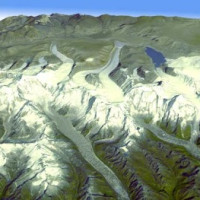
The discovery comes just a week after a prediction about glaciers in the Himalayas proved wrong. Rather than disappearing by 2035, as IPCC reports claim, the original research underlying the report predicted the mountain ice would last until 2350.

Read the rest at Radio Netherlands.

Comments 3 Comments »

india-flag-jpgThe Indian government has established its own body to monitor the effects of global warming because it “cannot rely” on the United Nations’ Intergovernmental Panel on Climate Change, the group headed by its own leading scientist Dr R.K Pachauri.

By Dean Nelson

The move is a significant snub to both the IPCC and Dr Pachauri as he battles to defend his reputation following the revelation that his most recent climate change report included false claims that most of the Himalayan glaciers would melt away by 2035. Scientists believe it could take more than 300 years for the glaciers to disappear.

The body and its chairman have faced growing criticism ever since as questions have been raised on the credibility of their work and the rigour with which climate change claims are assessed.

In India the false claims have heightened tensions between Dr Pachauri and the government, which had earlier questioned his glacial melting claims. In Autumn, its environment minister Mr Jairam Ramesh said while glacial melting in the Himalayas was a real concern, there was evidence that some were actually advancing despite global warming.

Dr Pachauri had dismissed challenges like these as based on “voodoo science”, but last night Mr Ramesh effectively marginalized the IPC chairman even further.

He announced the Indian government will established a separate National Institute of Himalayan Glaciology to monitor the effects of climate change on the world’s ‘third ice cap’, and an ‘Indian IPCC’ to use ‘climate science’ to assess the impact of global warming throughout the country.

“There is a fine line between climate science and climate evangelism. I am for climate science. I think people misused [the] IPCC report, [the] IPCC doesn’t do the original research which is one of the weaknesses… they just take published literature and then they derive assessments, so we had goof-ups on Amazon forest, glaciers, snow peaks.

Read the rest of this story at the Telegraph.

Comments 2 Comments »

himalayan-glaciersBy Ben Webster

The head of the UN’s climate change body is under pressure to resign after one of his strongest allies in the environmental movement said his judgment was flawed and called for a new leader to restore confidence in climatic science.

Rajendra Pachauri, chairman of the Intergovernmental Panel on Climate Change (IPCC), has insisted that he will remain in post for another four years despite having failed to act on a serious error in the body’s 2007 report.

John Sauven, director of Greenpeace UK , said that Dr Pachauri should have acted as soon as he had been informed of the error, even though issuing a correction would have embarrassed the IPCC on the eve of the Copenhagen climate summit.

A journalist working for Science had told Dr Pachauri several times late last year that glaciologists had refuted the IPCC claim that Himalayan glaciers would disappear by 2035. Dr Pachauri refused to address the problem, saying: “I don’t have anything to add on glaciers.” He suggested that the error would not be corrected until 2013 or 2014, when the IPCC next reported.

The IPCC issued a correction and apology on January 20, three days after the error had made global headlines. Mr Sauven said: “Mistakes will always be made but it’s how you handle those mistakes which affects the credibility of the institution. Pachauri should have put his hand up and said ‘we made a mistake’. It’s in these situations that your character and judgment is tested. Do you make the right judgment call? He clearly didn’t.”

Read the rest of this story at the London Times.

Comments No Comments »

professor-phil-jonesBy Fred Pearce

Phil Jones, the beleaguered British climate scientist at the centre of the leaked emails controversy, is facing fresh claims that he sought to hide problems in key temperature data on which some of his work was based.

A Guardian investigation of thousands of emails and documents apparently hacked from the University of East Anglia’s climatic research unit has found evidence that a series of measurements from Chinese weather stations were seriously flawed and that documents relating to them could not be produced.
Jones and a collaborator have been accused by a climate change sceptic and researcher of scientific fraud for attempting to suppress data that could cast doubt on a key 1990 study on the effect of cities on warming – a hotly contested issue.

Today the Guardian reveals how Jones withheld the information requested under freedom of information laws. Subsequently a senior colleague told him he feared that Jones’s collaborator, Wei-­Chyung Wang of the University at Albany, had “screwed up”.

The revelations on the inadequacies of the 1990 paper do not undermine the case that humans are causing climate change, and other studies have produced similar findings. But they do call into question the probity of some climate change science.

The apparent attempts to cover up problems with temperature data from the Chinese weather stations provide the first link between the email scandal and the UN’s embattled climate science body, the Intergovernmental Panel on Climate Change, as a paper based on the measurements was used to bolster IPCC statements about rapid global warming in recent decades.

Wang was cleared of scientific fraud by his university, but new information brought to light today indicates at least one senior colleague had serious concerns about the affair.

It also emerges that documents which Wang claimed would exonerate him and Jones did not exist.

The revelations come at a torrid time for climate science, with the IPPC suffering heavy criticism for its use of information that had not been rigorously checked – in particular a false claim that all Himalayan glaciers could melt by 2035 – and UEA having been criticised last week by the deputy information commissioner for refusing valid requests for data under the Freedom of Information Act.

The Guardian has learned that of 105 freedom of information requests to the university concerning the climatic research unit (CRU), which Jones headed up to the end of December, only 10 had been released in full.

Read the rest of this story at the Guardian.

Comments 7 Comments »

Earth Heating Up

Earth Heating Up

By Ninad D. Sheth

It was presented as fact. The UN’s Intergovernmental Panel on Climate Change, led by India’s very own RK Pachauri, even announced a consensus on it. The world was heating up and humans were to blame. A pack of lies, it turns out.

The climate change fraud that is now unravelling is unprecedented in its deceit, unmatched in scope—and for the liberal elite, akin to 9 on the Richter scale. Never have so few fooled so many for so long, ever.

The entire world was being asked to change the way it lives on the basis of pure hyperbole. Propriety, probity and transparency were routinely sacrificed.

The truth is: the world is not heating up in any significant way. Neither are the Himalayan glaciers going to melt as claimed by 2035. Nor is there any link at all between natural disasters such as Hurricane Katrina and global warming. All that was pure nonsense, or if you like, ‘no-science’!

The climate change mafia, led by Dr Rajendra K Pachauri, chairperson of the Intergovernmental Panel on Climate Change (IPCC), almost pulled off the heist of the century through fraudulent data and suppression of procedure. All the while, they were cornering millions of dollars in research grants that heaped one convenient untruth upon another. And as if the money wasn’t enough, the Nobel Committee decided they should have the coveted Peace Prize.

But let’s begin at the beginning. Mr Pachauri has no training whatsoever in climate science. This was known all the time, yet he heads the pontification panel which proliferates the new gospel of a hotter world. How come? Why did the United Nations not choose someone who was competent? After all, this man is presumably incapable of differentiating between ocean sediments and coral terrestrial deposits, nor can he go about analysing tree ring records and so on. That’s not jargon; these are essential elements of a syllabus in any basic course on climatology.

You cannot blame him. His degree and training is in railroad engineering. You read it right. This man was educated to make railroads from point A to point B.

THE GATHERING STORM

There are many casualties in this sad story of greed and hubris. The big victim is the scientific method. This was pointed out in great detail by John P Costella of the Virginia-based Science and Public Policy Institute. Science is based on three fundamental pillars. The first is fallibility. The fact that you can be wrong, and if so proven by experimental input, any hypothesis can be—indeed, must be—corrected.

This was systematically stymied as early as 2004 by the scientific in-charge of the University of East Anglia’s Climate Change Unit. This university was at the epicentre of the ‘research’ on global warming. It is here that Professor Phil Jones kept inconvenient details that contradicted climate change claims out of reports.

The second pillar of science is that by its very nature, science is impersonal. There is no ‘us’, there is no ‘them’. There is only the quest. However, in the entire murky non-scientific global warming episode, if anyone was a sceptic he was labelled as one of ‘them’. At the very apex, before his humiliating retraction, Pachauri had dismissed a report by Indian scientists on glaciers as “voodoo science”.

The third pillar of science is peer group assessment. This allows for validation of your thesis by fellow scientists and is usually done in confidence. However, the entire process was set aside by the IPCC while preparing the report. Thus, it has zero scientific value.

The fact that there was dissent within the climate science teams, that some people objected to the very basis of the grand claims of global warming, did not come out through the due process. It came to light when emails at the Climate Research Centre at East Anglia were hacked in November 2009. It is from the hacked conversations that a pattern of conspiracy and deceit emerge. It is a peek into the world of global warming scaremongering—amplify the impact of CO2, stick to dramatic timelines on destruction of forests, and never ask for a referral or raise a contrary point. You were either a believer in a hotter world or not welcome in this ‘scientific fold’.

HOUSE OF CARDS AND COLOUR OF CASH

So we have the fact that a non-expert heads the IPCC. We have the fact that glaciers are not melting by 2035; this major scaremongering is now being defended as a minor error (it was originally meant to be 2350, some have clarified). The date was spouted first by Syed Hasnain, an Indian glacier expert, in an interview to a magazine. It had no scientific validity, and, as Hasnain has himself said, was speculative.

On the basis of that assertion, The Energy and Resources Institute (Teri) that Pachauri heads and where Hasnain works in the glaciology team, got two massive chunks of funding. The first was estimated to be a $300,000 grant from Carnegie Corporation and the second was a part of the $2 million funding from the European Union. So you write a report that is false on glaciers melting and get millions to study the impact of a meltdown which will not be happening in the first place. Now if this is not a neat one, what is?

Read the rest of this article at Open.

Comments 16 Comments »

pachauriBy Steve Everly

The story behind the IPCC director’s involvement in winning huge grants to study the impacts of a debunked claim about glaciers melting in the Himalayas had another layer added today when the Times Online (U.K.) reported that he knew about the bogus claim before announcing his latest award to study it.

Dr. Rajendra Pachauri, the head of the U.N. IPCC, knew about the lack of credibility of the claim that glaciers in the Himalayas would melt by 2035, which was included in the 2007 IPCC report, as far back as prior to the Copenhagen climate conference in December 2009.

But according to Pachauri, he didn’t find out about the problematic claim, for which the IPCC was forced to apologize last week, until early January 2010. Pachauri said he didn’t recognize the error until “about ten days” before his recent conversation with the Times on January 22nd.

On January 15th, however, approximately three days after the time when Pachauri claimed to have found out about the error, his Energy and Resources Institute (TERI) announced a collaboration with the Global Center of Iceland, funded primarily by the Carnegie Corporation of New York, to study the impacts of Himalayan glacier melt, noting specifically that “credible” science suggested the glaciers could be gone in the next few decades.

So Pachauri knew about the false claim, did not instruct his organization to cancel the collaboration to study the impacts of that false claim, and his organization will be accepting money for research on that false claim.

Read the rest of this story at American Solutions.

Comments 25 Comments »

Bad Behavior has blocked 1653 access attempts in the last 7 days.